

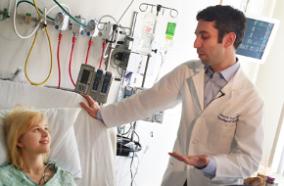
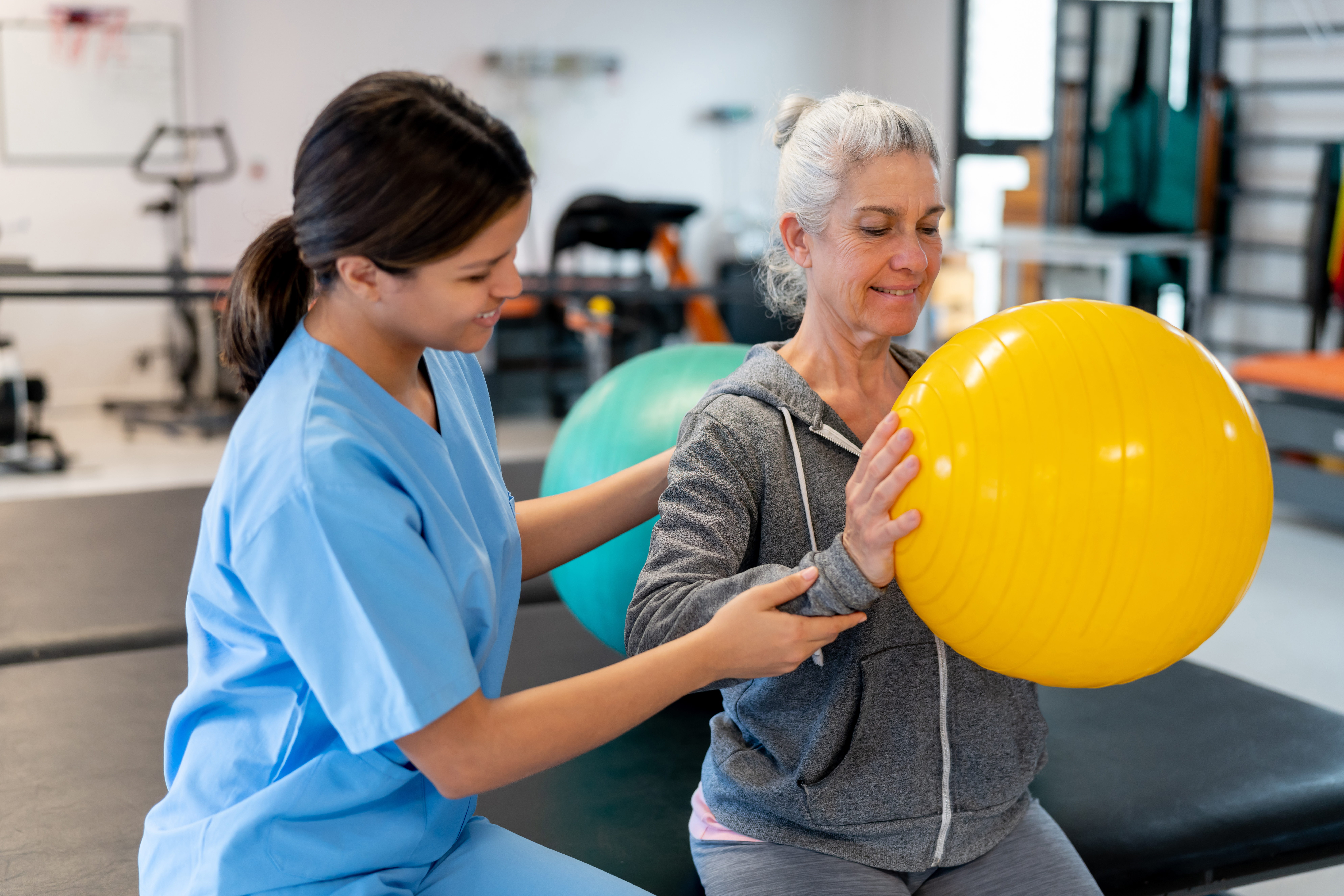
According to 2021-2025 Global Burden of Disease (GBD) data, stroke is the leading neurological cause of disease burden in the world. Post-stroke motor dysfunction, which includes limb weakness, spasticity and impaired balance, is the primary cause of disability.
Options for patients with upper extremity motor deficits who have plateaued with conventional rehabilitation have been limited. This is now changing. The team in Rehabilitation Medicine and the Neurosciences Institute at UW Medicine are the driving force behind a new option for chronic (>6 months) stroke patients. It’s a recently launched clinical program using Paired Vagus Nerve Stimulation (VNS) therapy for stroke survivors.
The FDA-approved device works to stimulate the release of important neurotransmitters involved in neuroplasticity to enhance the effectiveness of stroke rehabilitation therapy. Federal approval was predicated on the results of the pivotal VNS-REHAB study Nicole Mazwi, MD, director of stroke rehabilitation in the Division of Physiatry at UW Medicine, says, “This is a tremendous breakthrough for the multitude of severely affected stroke survivors who will benefit from it, and who before this have not had many options in the chronic phase of recovery.”
What is Vagus Nerve Stimulation?
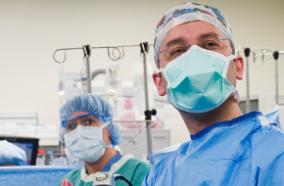
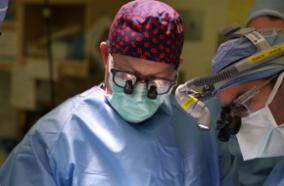
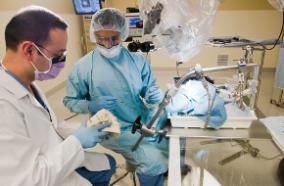
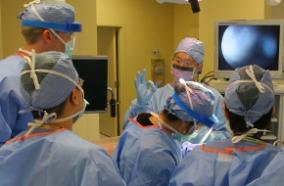
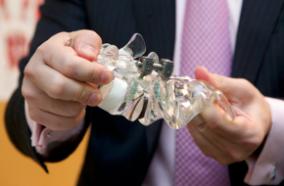
VNS uses an implanted vagus nerve stimulator to deliver electrical impulses to the vagus nerve during rehabilitation therapy to reduce upper-extremity motor deficits and improve function. It is now FDA-approved for chronic ischemic stroke patients with moderate to severe arm impairment. The surgeon attaches the lead to the vagus nerve in the neck and places the pulse generator in the chest.
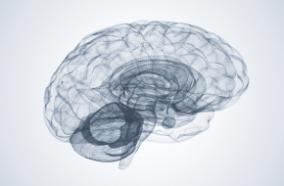
“Stimulation of the vagus nerve activates several brain stem nuclei that release neuromodulators that are important for learning and synaptic plasticity,” explains Benjamin Grannan, MD, neurosurgeon at UW Medicine who specializes in epilepsy, movement disorders and neuromodulation. “These neuromodulators influence widespread cortical networks and play a key role in the patient’s attention, learning, synaptic strengthening and cortical reorganization. When we pair VNS with movement training, the neuromodulators are thought to help reinforce the neural circuits while the patient is moving.”
For practical patient use, the system also includes a magnet for home activating and deactivating stimulation.
How paired VNS works
Paired VNS leverages the brain’s neuroplasticity. Pairing refers to the combination of VNS and simultaneous exercise. This approach strengthens and creates new neural pathways.
“For decades, doctors have safely used vagus nerve stimulation (VNS) to treat conditions like epilepsy,” says Dr. Mazwi. “Now we’re using that well-known concept to help stroke survivors recover movement in their hands and arms.”
During rehab exercises and daily activities, the stimulator delivers a gentle pulse via the vagus nerve as the patient moves. The goal is to boost neuroplasticity so the brain strengthens existing pathways and forms new ones related to arm and hand use.
“We’ve seen essential functional activities become possible for the patients who have undergone VNS therapy,” notes Dr. Mazwi. “Eating, dressing, writing, opening containers and household tasks become manageable, which can lead to greater independence and improved quality of life.”
The ideal patient candidates for paired VNS
While VNS holds the promise of helping many, it is not appropriate for all stroke survivors. Patients must meet certain clinical and functional criteria before they’re eligible for paired VNS. The ideal patient is 6 months or more from their stroke,has persistent upper extremity impairment, and has enough voluntary movement to participate in therapy.
Comprehensive clinical evaluation
A multidisciplinary rehabilitation team conducts a more detailed assessment to determine whether VNS therapy is appropriate. The evaluation may include a neurological examination, standardized motor function testing, and a review of medical conditions that could affect surgery or therapy.
“The goal is to determine if the patient can safely undergo the implantation and actively participate in the rehab program,” says Dr. Grannan.
While the program launches with a select group, the UW Medicine team has every expectation for expansion to other stroke survivor populations.
What VNS means for stroke care
The key benefit for the patient after stroke is increased upper extremity movement and control. Clinical trials show that pairing VNS with rehabilitation can reduce upper-extremity motor deficits and increase motor function. Patients gain greater strength, better coordination and more control in the affected limb.
“We’ve seen improvements in grip, finger control and reaching or grasping motions,” says Dr. Mazwi. “Studies show that positive results are sustained; participants saw improvements in activity and participation for at least one year after treatment. And follow-up research suggests patients continue to experience a meaningful recovery long after therapy ends.”
Adds Dr. Grannan, “This provides a new treatment option for patients who, before now, had limited recovery opportunities in the chronic phase of stroke. Paired VNS therapy can bring about sustained neurological improvement and we expect it to be a therapeutic standard in our care of stroke patients going forward. We are excited to be able to offer this care to our community.”
Refer a patient: https://www.uwmedicine.org/practitioner-resources