
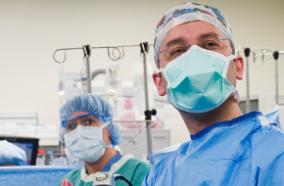
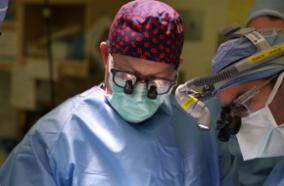
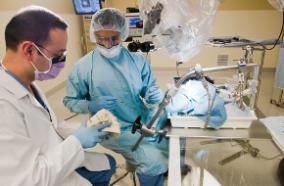
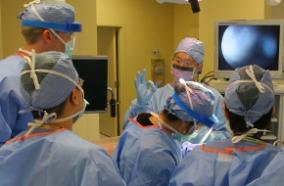
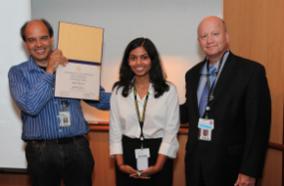
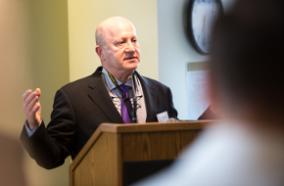
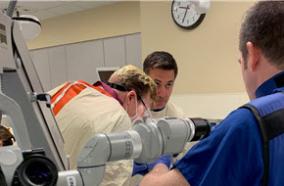
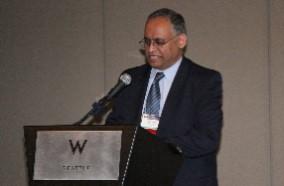

Many physicians in the Departments of Neurological Surgery and Neurology have welcomed students into their operating rooms and clinics, creating more than 500 opportunities for surgical observations and clinical observations.
OR Observations
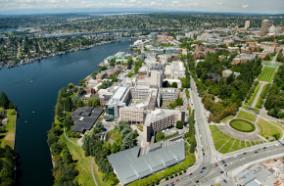
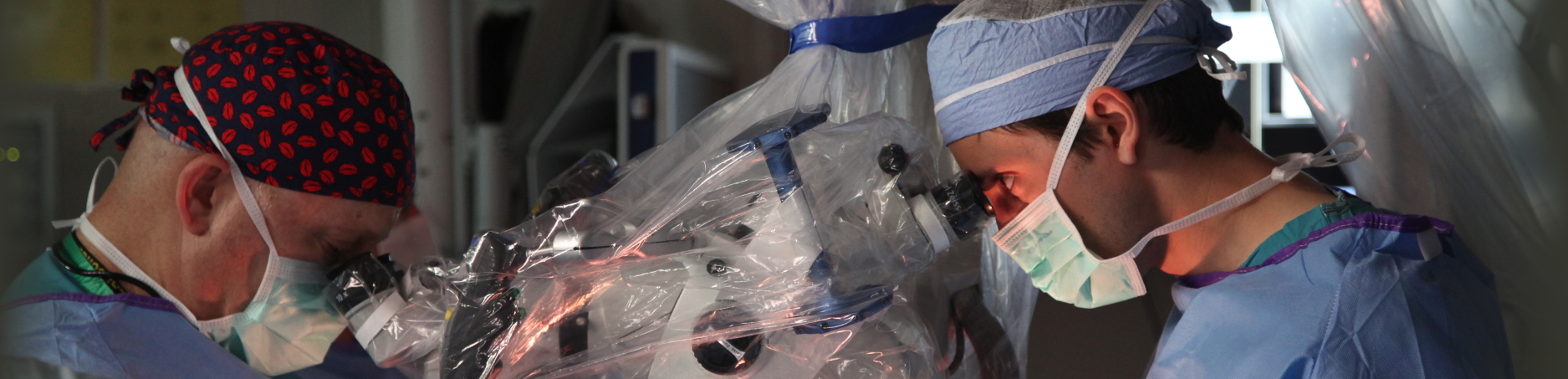
A cornerstone of the program is mentorship by neurological surgeon–scientists and the opportunity to observe operative procedures at Harborview Medical Center, Seattle Children’s Hospital, and the University of Washington Medical Center. Students are exposed to a broad spectrum of surgeries that reflect the program’s strong integration of clinical care and laboratory research, including brain tumor resections with cortical mapping; epilepsy grid placement and seizure foci resection; deep brain stimulation; endovascular aneurysm procedures; and complex craniofacial, endoscopic, and congenital neurosurgical cases. Through these experiences, students develop a deep appreciation for compassionate, patient-centered, and safe healthcare delivery.
Operating room observation is both educational and inspirational, offering students first-hand exposure to surgical preparation, interdisciplinary teamwork, operative decision-making, and postoperative outcome assessment. This immersive OR experience is a defining feature of the program. Combined with laboratory research, Grand Rounds, Resident Education Hour, and the Friday Faculty Lecture Series, these experiences converge at the point of patient care. Together, they highlight the precision required to achieve optimal outcomes, the value of translational research, and—most importantly—the human stories of patients and their families. Students frequently describe observing neurological surgery as a transformative experience.
Students spend one to two days observing in the operating room, often following surgeons and residents through multiple procedures. Depending on case complexity, this may involve a single extended operation, such as a tumor resection or epilepsy surgery, or several shorter procedures, including spine surgeries.
Clinical Observations
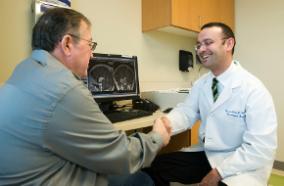
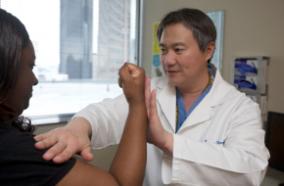
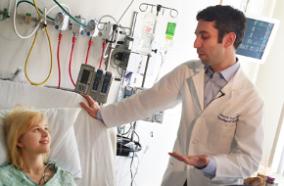
In addition to operating room experiences, students have the opportunity to spend one to two days engaged in clinical observation, guided by clinical mentors that include Neurological Surgery faculty hospitalists, attending faculty, and neurologists. During these experiences, students are introduced to the foundational elements of clinical practice by observing the full clinical encounter: how clinicians communicate with patients, actively listen to patient concerns, perform neurological examinations, interpret and explain clinical findings, and discuss diagnoses and treatment options in a clear and compassionate manner. This clinical exposure reinforces the patient-centered principles emphasized throughout the program and provides students with an early, meaningful understanding of the practice of medicine.
The following are examples of Neurological Surgery and Neurology faculty whom participants have observed in the operating room and in clinical settings:
- Robert Bonow, MD
- Samuel Browd, MD, PhD
- Robert Buckley, MD
- Stephanie Chen, MD
- Marie Davis, MD, PhD
- Richard Ellenbogen, MD, FACS
- Sam Emerson, MD, PhD
- Manuel Ferreira Jr., MD, PhD, MBA
- Hannah Goldstein, MD
- Jerome J. Graber, MD, MPH
- Benjamin Grannan, MD
- Christoph Hofstetter, MD, PhD
- Mahesh Karandikar, MD, PhD
- Imad Khan, MD
- Louis Kim, MD, MBA
- Andrew Ko, MD
- Amy Lee, MD
- Michael Levitt, MD
- Justin Miller, PhD, ABPP/CN
- Nicole Mazwi, MD
- Michael Rosenbloom, MD, FAANS
- Jacob Ruzevick, MD
- Laligam Sekhar, MD, FACS, FAANS
- Timothy D. Steege, MD
- Jonathan R. Weinstein, MD, PhD
- Diana B. Wiseman, MD, MBA