



Dear Prospective Resident,
On behalf of our faculty, residents, and staff, I am delighted to welcome you and to share why our program offers one of the most rigorous and rewarding training tracks in academic neurosurgery.
I am a product of University of Washington myself. I came to University of Washington as an MSTP student. I had the privilege to train in this department and remain on faculty. One of the best parts of my job is collaborating with our associate program directors and all faculty to guide our residents on their path to becoming leaders in neurological surgery.
I can tell you firsthand what makes this program special are the people, the extraordinary patients who let us into their lives and to take care of them, and a uniquely vibrant scientific community at UW that envelops our program.
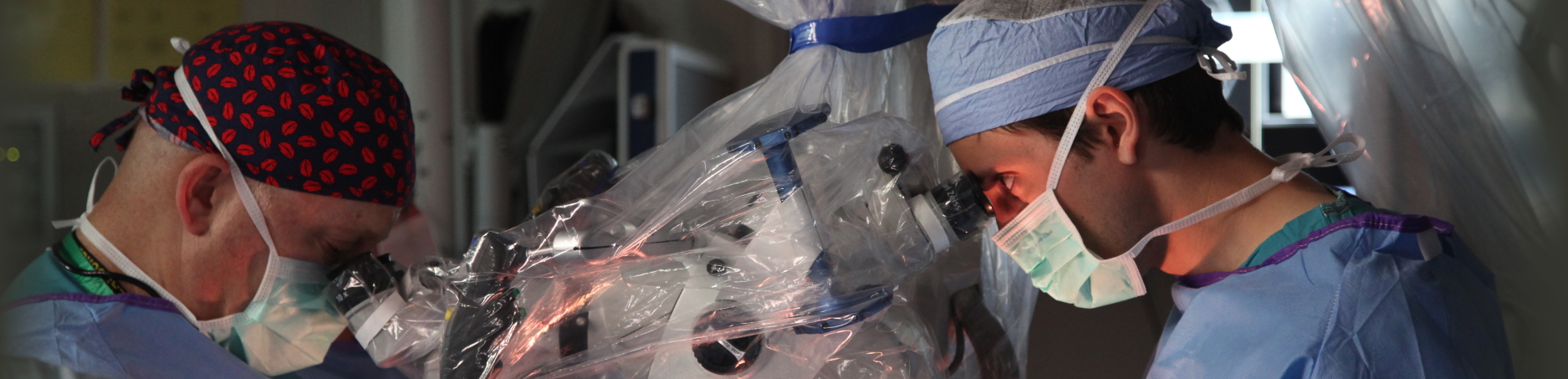
Our residency is a seven-year program that takes residents through a structured progression — from foundational neuroscience and neurosurgical training in the internship year, through increasing clinical and operative responsibility as junior and senior residents, and ultimately to serve as Chief Resident with full responsibility for coordinating operative schedules and mentoring junior colleagues. Every step includes mentorship by the Chair, Program Directory, and faculty who work with residents one-on-one.
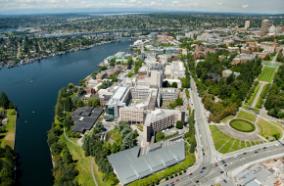
Training takes place across outstanding, complementary institutions that together form one of the largest health care systems in the country, serving the entire WWAMI region (Washington, Wyoming, Alaska, Montana, and Idaho), including:
- Harborview Medical Center — the busiest Level I trauma center for a five-state region covering more than quarter of national land mass. At this site in addition to critical polytrauma, we have busy elective vascular/endovascular, tumor, spine, functional/epilepsy, peripheral nerve services and transitional pediatric-to-adulthood congenital services.
- University of Washington Medical Center - Montlake and Northwest — advanced neuro-oncology, Gamma knife, skull base, epilepsy surgery, and spine
- Seattle Children's Hospital — the full spectrum of dedicated pediatric neurosurgery
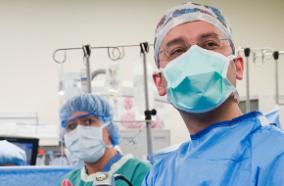
This breadth means our residents graduate with case logs, several order of magnitudes above graduation requirements across all subspecialties of neurological surgery, including neuro-oncology, cerebrovascular and endovascular surgery, spine, pediatric neurosurgery, epilepsy and functional neurosurgery, trauma, radiosurgery, and pain and restorative neurosurgery.
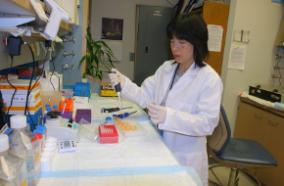
Residents take advantage of a strong research infrastructure in our department to complete broad projects under the tutelage of basic and clinical faculty. Every year, our residents secure multiple competitive grants, present their work nationally and internationally, and are prolific in publishing their work.
Neurosurgery residency is demanding, and there is no substitute for training in a program with outstanding mentorship, camaraderie, and a genuine culture of support. I encourage you to explore our website to learn more about our faculty, our current residents and alumni, and life in Seattle. I am proud of the neurosurgeons this program produces, and I look forward to the possibility of welcoming you as a future colleague.
Warm regards,
Ali C. Ravanpay, MD, PhD, FAANS, FACS
Program Director
Neurological Surgery Residency Program
University of Washington